

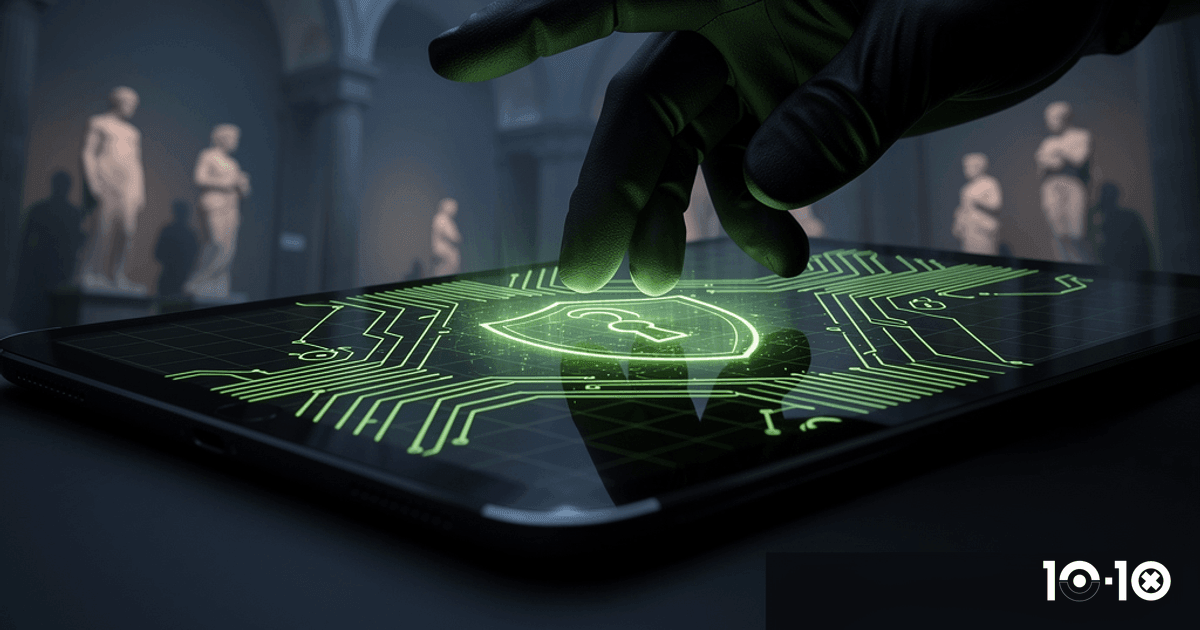
When hackers target museums: the Uffizi attack and the rising cyber security threat to cultural heritage
Last winter, one of Italy’s most iconic cultural institutions, the Galleria degli Uffizi in Florence, found itself in the crosshairs of a cyber attack. While no material damage or data theft was reported, the incident has reignited a critical conversation about cyber security for cultural heritage organisations across Europe. For business owners and IT leaders in the cultural sector, it is a stark reminder: if one of the world’s most visited museums can be targeted, no institution is truly safe.
The Uffizi incident may not have resulted in catastrophic losses, but it exposed a systemic vulnerability that extends well beyond a single Florentine gallery. Museums, archives, theatres, and cultural foundations increasingly depend on digital infrastructure, from ticketing platforms and online collections to donor databases and IoT-enabled climate control systems. Each of these digital touchpoints represents a potential entry point for attackers.
According to a 2024 report by the European Union Agency for Cybersecurity (ENISA), attacks targeting public administration and cultural institutions rose by over 30% year-on-year. The cultural sector, historically underfunded in terms of IT security, has become a soft target for threat actors ranging from opportunistic ransomware gangs to state-sponsored groups interested in espionage or disruption.
Why cultural institutions are uniquely vulnerable
Cultural organisations face a distinctive set of challenges when it comes to information security. Unlike banks or tech companies, museums and heritage sites were never designed with cybersecurity at their core. Their digital transformation has often been rapid and reactive, driven by the need to sell tickets online, manage visitor flows, or digitise collections, without a corresponding investment in security architecture.
Legacy systems and limited budgets
Many Italian and European museums still run on ageing IT infrastructure. Legacy systems that were never designed to withstand modern threats remain connected to the internet, sometimes without basic protections such as network segmentation or multi-factor authentication. Budget constraints are a constant pressure: when a museum must choose between restoring a Renaissance fresco and upgrading its firewall, the fresco usually wins.
A 2023 survey by ICOM (International Council of Museums) found that fewer than 40% of mid-sized European museums had a dedicated IT security budget, and only 22% had conducted a formal cyber risk assessment in the previous two years. These numbers paint a concerning picture of an entire sector operating with minimal defences.
High-value data, low awareness
Cultural institutions hold more sensitive data than many people realise. Donor records, patron payment details, staff personal information, insurance valuations of artworks, and even sensitive research data all reside within museum networks. A breach involving donor financial information or high-value artwork insurance records could have severe legal and reputational consequences.
Staff awareness is another critical gap. In many cultural organisations, cybersecurity training is either non-existent or limited to a single annual session. Phishing remains the most common attack vector, and museum employees, often focused on curatorial or administrative tasks, may not recognise a well-crafted social engineering attempt.
The NIS2 directive and what it means for the cultural sector
The European Union’s NIS2 Directive, which EU member states were required to transpose into national law by October 2024, significantly expands the scope of organisations that must meet baseline cybersecurity requirements. While the directive primarily targets essential and important entities in sectors such as energy, transport, and healthcare, its ripple effects are being felt across the cultural sector.
In Italy, the national transposition of NIS2 has broadened the definition of entities that may fall under regulatory obligations, particularly when they manage critical digital infrastructure or handle significant volumes of personal data. Large museums, national archives, and cultural foundations with substantial digital operations may find themselves directly or indirectly within scope. Even those that fall outside the strict legal perimeter should treat NIS2’s requirements as a best-practice benchmark. Understanding NIS2 compliance obligations is an essential first step for any organisation navigating this evolving regulatory landscape.
The directive requires covered entities to implement risk management measures, incident reporting procedures, supply chain security assessments, and business continuity plans. For cultural institutions accustomed to operating without formal cybersecurity governance, meeting these requirements will demand a significant shift in both mindset and resource allocation.
Practical lessons for European SMBs in the cultural sector
The Uffizi attack carries lessons that extend beyond large national museums. Small and medium-sized cultural businesses, private galleries, heritage tourism operators, event venues, auction houses, and arts organisations, face many of the same threats with even fewer resources.
Start with a risk assessment
Every organisation, regardless of size, should begin with a thorough understanding of its risk profile. What data do you hold? Where is it stored? Who has access? What would happen if that data were encrypted by ransomware or exfiltrated? A structured risk assessment does not have to be expensive, but it must be honest.
Invest in the basics
The vast majority of successful cyber attacks exploit basic security gaps. Implementing multi-factor authentication, keeping software patched and up to date, segmenting networks so that a compromised ticketing system cannot reach the donor database, and maintaining reliable offline backups, these measures stop the bulk of common threats. Partnering with a trusted security vendor can provide enterprise-grade protection even for smaller organisations. Solutions from established cybersecurity technology partners offer scalable protection designed for organisations that lack large internal security teams.
Build a culture of security awareness
Technology alone is not enough. Staff at every level need to understand their role in protecting the organisation. Regular, practical training sessions, focused on recognising phishing emails, reporting suspicious activity, and following secure data handling procedures, can dramatically reduce the human risk factor.
Develop an incident response plan
The Uffizi incident also underscores the importance of having a plan before an attack occurs. An incident response plan should outline who is responsible for what, how systems will be isolated, how stakeholders will be notified, and how operations will be restored. Organisations that practise their response through tabletop exercises recover faster and with less damage.
The broader picture: digital resilience for cultural heritage
The digitisation of cultural heritage is irreversible, and overwhelmingly positive. Online collections make art accessible to millions, digital archives preserve fragile documents, and smart building systems protect priceless works from environmental damage. But this digital dependency creates a responsibility to protect the infrastructure that supports it.
Italy, home to more UNESCO World Heritage Sites than any other country, has a particular stake in getting this right. A successful ransomware attack that locked access to a museum’s digital archive, or a breach that exposed donor data, would not just be a technical incident, it would be a blow to public trust in the institutions that safeguard our shared cultural memory.
The European Cybersecurity Act and the NIS2 Directive provide a regulatory framework, but compliance alone is not security. True resilience requires a proactive approach: continuous monitoring, regular testing, and a willingness to treat cybersecurity as an ongoing investment rather than a one-time project. Organisations looking to strengthen their overall security posture can benefit from a comprehensive approach to cybersecurity that addresses both technology and governance.
What comes next
The Uffizi attack was a warning shot. It revealed that even world-renowned institutions can find themselves exposed, and that the cultural sector as a whole needs to accelerate its cybersecurity maturity. For SMBs operating in this space, whether managing a private collection, running a heritage hotel, or organising cultural events, the message is clear: cyber threats do not discriminate based on the beauty of what you protect.
The good news is that effective security does not require an unlimited budget. It requires awareness, planning, and the right partnerships. By taking measured, practical steps today, cultural organisations of all sizes can protect not just their data, but the heritage they are entrusted to preserve for future generations.