

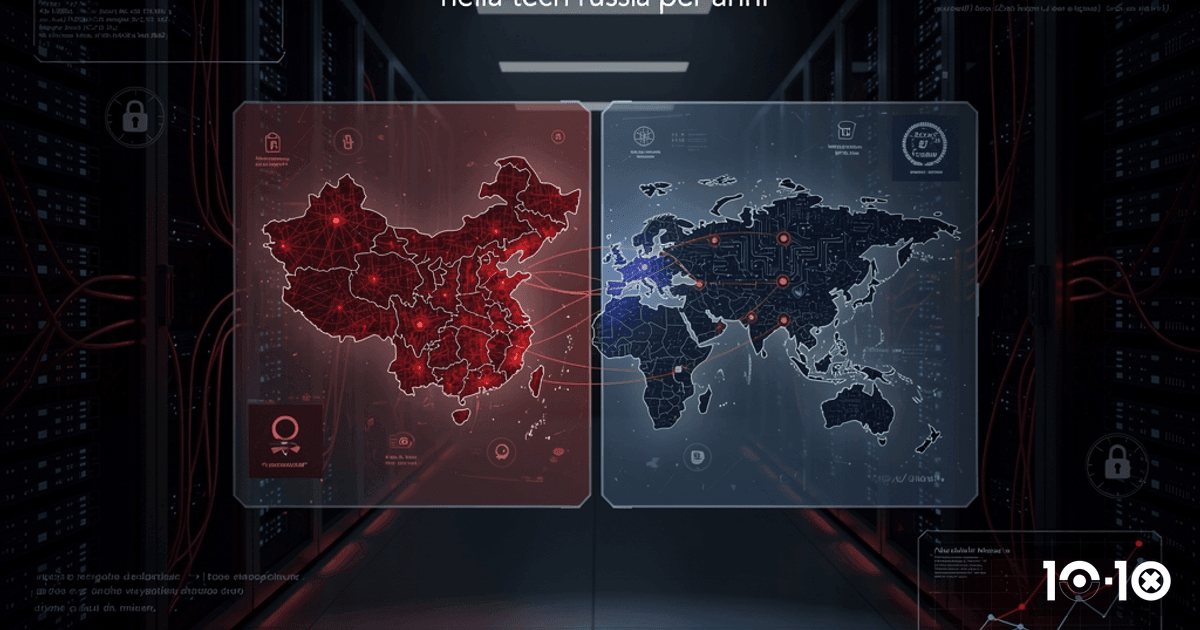
Chinese cyber espionage: what APT31’s years-long campaign means for European businesses
When a state-sponsored hacking group spends years infiltrating technology companies in a major world power, it is not just a geopolitical headline. It is a warning signal for every business that depends on digital infrastructure. The recent revelations about APT31, a Chinese cyber espionage group, conducting prolonged operations against Russian technology firms should prompt serious reflection among European SMBs about their own cybersecurity posture.
APT31, also tracked as Zirconium and Judgment Panda, is one of several hacking units linked to China’s Ministry of State Security. Their mission is straightforward: steal intellectual property, gather strategic intelligence, and maintain persistent access to valuable networks. The fact that they targeted a geopolitical ally like Russia for years without detection underscores a sobering reality — no organisation is off-limits, and sophisticated attackers are patient.
Who is APT31 and why should you care
APT31 is not a group of opportunistic hackers. They are a professional cyber espionage unit with state resources, operating under the umbrella of China’s intelligence apparatus. US federal indictments in 2024 named seven Chinese nationals associated with the group, detailing a campaign spanning over 14 years that targeted government officials, technology companies, defence contractors, and political organisations across multiple continents.
Their toolkit is extensive. APT31 operators use carefully crafted spear-phishing emails, zero-day exploits targeting unpatched software, compromised home and small office routers to build proxy networks, and custom malware designed to evade standard security tools. They also rely heavily on so-called “living-off-the-land” techniques, using legitimate system tools already present on a victim’s network to move laterally and exfiltrate data without triggering alarms.
What makes this group particularly relevant for European businesses is their track record on our continent. In 2024, Finland, the United Kingdom, and several other EU member states publicly attributed cyberattacks to APT31. The European Parliament itself was among the confirmed targets. If national parliaments and major technology firms in Russia can be compromised, the defences of a mid-sized European company deserve honest scrutiny.
Lessons from the Russian tech sector breach
The APT31 campaign against Russian technology companies offers several concrete lessons that apply directly to European SMBs, particularly those in Italy and across the EU.
Persistence beats perimeter defences
APT31 maintained access to Russian networks for years. This is not unusual for advanced persistent threats — the name says it all. Traditional perimeter security, such as a single firewall or basic antivirus software, is not designed to detect an attacker who is already inside your network and moving slowly.
European SMBs often rely on a “set and forget” approach to cybersecurity. A firewall gets installed, endpoint protection is purchased, and the topic gets revisited only after an incident. The APT31 case demonstrates that continuous monitoring, regular threat hunting, and network segmentation are not luxuries reserved for large enterprises. They are baseline requirements.
Supply chain and technology partners are attack vectors
State-sponsored groups frequently target technology companies not as an end goal, but as a stepping stone. By compromising a software vendor, managed service provider, or hardware manufacturer, attackers gain access to hundreds or thousands of downstream customers.
For Italian and European SMBs, this means that your security is only as strong as the weakest link in your supply chain. Every software provider, cloud service, and IT partner you rely on represents a potential entry point. The NIS2 Directive, which is reshaping cybersecurity compliance across the EU, explicitly addresses supply chain security for this exact reason. If you have not yet evaluated how NIS2 affects your business and your vendor relationships, the time to start is now.
Intellectual property theft is not just a big-company problem
A common misconception among SMB owners is that cyber espionage groups only target large corporations or government agencies. The data tells a different story. According to Verizon’s Data Breach Investigations Report, over 40% of breaches involve small and medium businesses. Europol’s Internet Organised Crime Threat Assessment consistently highlights that SMBs across Europe are disproportionately affected because they often lack dedicated security teams.
If your company develops proprietary software, holds customer data, operates in a regulated sector, or is part of a larger supply chain, you hold assets that are valuable to threat actors. Chinese APT groups have demonstrated interest in sectors ranging from manufacturing to healthcare to professional services — all areas where Italian SMBs have a strong presence.
How European SMBs can strengthen their defences
Understanding the threat is the first step. Acting on it is what separates resilient businesses from future headlines. Here are practical measures that any European SMB can implement.
Invest in layered security, not single solutions
No single product will stop a determined, state-sponsored attacker. Effective cybersecurity requires multiple layers: next-generation firewalls, endpoint detection and response (EDR), email filtering, network monitoring, and regular vulnerability scanning. These layers work together so that if one control fails, others can detect or contain the threat.
Working with established security vendors and experienced partners is critical. A well-configured, managed security stack from a trusted technology partner provides capabilities that would be difficult and expensive to build in-house, giving SMBs access to enterprise-grade protection at a manageable cost.
Prioritise employee awareness training
More than 80% of successful cyberattacks begin with a phishing email or social engineering technique. APT31’s primary initial access method is spear-phishing — carefully researched emails designed to trick a specific individual into clicking a link or opening an attachment.
Regular security awareness training, combined with simulated phishing exercises, can dramatically reduce this risk. Employees need to understand that they are a critical part of the security perimeter, not just end users. Training should be ongoing, not a one-time compliance exercise.
Implement network segmentation and access controls
If an attacker gains access to one system, network segmentation limits how far they can move. By dividing your network into isolated zones and applying strict access controls based on the principle of least privilege, you contain potential breaches and make lateral movement significantly harder.
This is especially important for businesses with operational technology (OT) environments, remote workers, or multiple office locations. A properly designed IT infrastructure incorporates segmentation as a foundational element, not an afterthought.
Develop and test an incident response plan
The APT31 campaign in Russia went undetected for years. Early detection and rapid response are what separate a minor security event from a catastrophic breach. Every SMB should have a documented incident response plan that answers basic questions: who do we call, what do we shut down, how do we communicate, and how do we recover.
This plan should be tested at least annually through tabletop exercises. When an incident occurs — and statistics suggest it is a matter of when, not if — a rehearsed response can reduce downtime, financial loss, and reputational damage by orders of magnitude.
Stay current with regulatory requirements
The European regulatory landscape is evolving rapidly. The NIS2 Directive, GDPR enforcement actions, and sector-specific regulations like DORA for financial services are raising the baseline for what is expected of businesses in terms of cybersecurity. Non-compliance carries significant penalties, but more importantly, these frameworks reflect genuine best practices that reduce real-world risk.
Italian SMBs operating in sectors covered by NIS2 should conduct a gap analysis against the directive’s requirements and develop a remediation roadmap. Even businesses not directly covered will benefit from adopting the same standards, as customers and partners increasingly expect demonstrated security maturity.
The bigger picture: cyber espionage is an SMB problem
The APT31 revelations are a reminder that the threat landscape does not respect company size, geography, or political alliances. A Chinese state-sponsored group spent years inside Russian technology companies — organisations that presumably had significant security resources. European SMBs, many of which are still building their cybersecurity capabilities, face the same categories of threats with fewer resources to combat them.
The good news is that effective cybersecurity does not require unlimited budgets. It requires informed decision-making, consistent execution of fundamentals, and the right partnerships. Understanding threats like APT31, investing in layered defences, training your people, and aligning with European regulatory frameworks will place your business ahead of the vast majority of targets that sophisticated attackers evaluate and find easy to compromise.
The question is no longer whether state-sponsored cyber espionage affects your business. It is whether your business is prepared to face it.